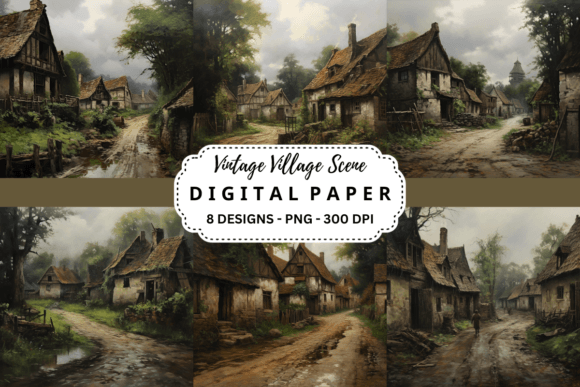
Vintage Village Scene Backgrounds: Nostalgic Design Assets
Why These Village Scenes Resonate Today
There’s a particular warmth to a Vintage Village Scene Background. It’s not just a collection of old buildings or quaint streets; it’s a visual shorthand for community, simplicity, and a slower pace of life. In our digital age, where interfaces are often sterile and minimal, these backgrounds offer a tangible sense of place and history. They carry a personality that’s both charming and grounded, making them powerful design assets for projects that need to evoke trust, heritage, or a handcrafted feel. The visual style is rich with texture—think cobblestone streets, weathered brick, and soft, muted color palettes that feel aged and authentic. This isn’t about slick, modern perfection; it’s about character.
Practical Applications for Designers and Creators
The true value of a premium asset like this lies in its versatility. These 3600 x 3600 pixel images at 300 DPI are built for professional output. For a graphic designer working on packaging design for a local artisan product—say, a small-batch jam or a handmade soap—these backgrounds instantly communicate the product’s story and origin. Layer your logo design over a village square, and you’ve created a brand narrative that feels rooted and genuine.
For social media graphics and content creators, especially those in travel blogging, lifestyle, or historical niches, these scenes are gold. They provide a consistent, recognizable aesthetic for Instagram stories, Pinterest pins, or Facebook banners that stops the scroll. The detail is high enough for print on demand design projects, making them perfect for creating unique posters, canvas prints, or even wrapping paper with a storybook feel. A marketer designing an invitation for a rustic wedding or a community event will find the perfect canvas here, eliminating the need for expensive location shoots.
Integrating with Modern Typography
The key to using such a rich background effectively is in your typographic choices. Avoid pairing it with a hyper-modern, geometric sans serif font that can feel jarring. Instead, look for a serif font with some personality, perhaps a slab serif or a transitional serif, to maintain that classic feel. A carefully chosen script font or handwritten font can work beautifully for headlines or accents, mimicking the personal touch of the scene. For body text, ensure your font pairing prioritizes readability; a clean, sturdy serif or a humanist sans serif will keep your message clear against the detailed backdrop. This thoughtful combination enhances your brand identity, creating a cohesive and professional look that feels intentional, not accidental.
Making the Most of Your Design Assets
Before you dive into a project, evaluate the fit. Does the scene’s specific era or region align with your client’s brand or your project’s message? A thatched-roof cottage village might suit a cozy bed-and-breakfast, while a stone-built town square could better frame a gourmet food brand. Test the backgrounds with your existing design assets—your logo, your color palette, your chosen typeface. See how the textures interact. Sometimes, a slight overlay or a subtle color adjustment in your editing software can help the background better support your foreground elements without competing.
Remember the fundamentals of visual hierarchy. Your text needs to be the star. Use the background’s natural lines and lighter areas to guide placement. You might need to add a semi-transparent shape behind your text to ensure contrast and readability, especially with smaller font sizes. This is where your skill as a creative professional comes in—using these premium font and background resources not as a crutch, but as a stage to elevate your core message.
Finally, the practical details matter. These files are delivered as individual PNGs, which means they come with a transparent background in many cases, offering immense flexibility. You can layer them, combine elements from different scenes, or use them as isolated vignettes. For commercial use, the licensing is straightforward, allowing you to incorporate these scenes into client work, merchandise, and digital products with confidence. They are a serious toolkit for the designer, entrepreneur, or crafter who understands that sometimes, the most powerful modern design is built on a foundation of timeless charm.